
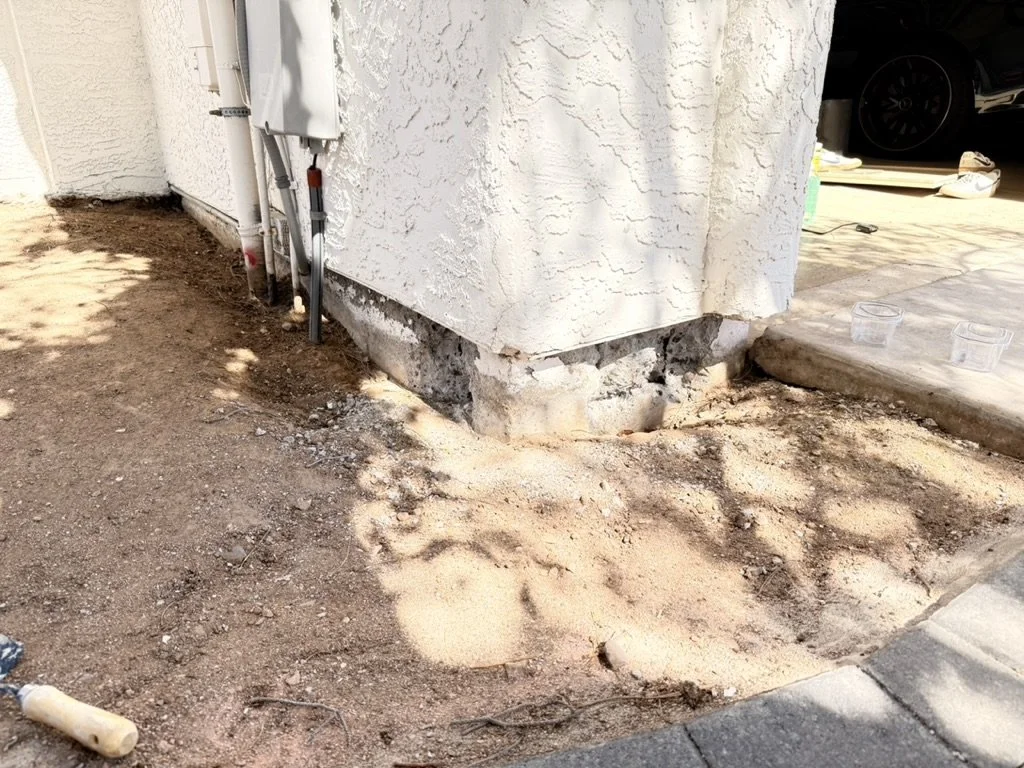
Why Is the Concrete at the Base of My House Flaking?
Why is the concrete at the base of your home flaking and how do I fix it.
If you are noticing flakes, chips, or crumbling concrete along the bottom of your home, it can raise questions. Not only does it hurt the curb appeal of the house, but it can also mean something more disruptive is happening at the foundation level. So what’s actually happening, and can I simply just patch over it?
The answer depends on what is causing the deterioration. Flaking concrete can have several causes, and understanding the source helps you choose the right repair.
Rusting Steel Inside the Concrete
First, it’s important to understand what you're looking at. A stem wall is the short concrete wall that connects a home’s footing to the structure above it. Steel reinforcement inside the concrete helps strengthen it.
When that steel corrodes, the rust occupies more space than the original metal. This expansion puts pressure on the surrounding concrete, potentially causing cracks and pieces to break away. This type of damage is called spalling.
Rust stains, exposed steel, or concrete breaking away along the reinforcement may be clues. However, flaking alone does not establish that corrosion is the cause.We consider a few factors when putting together a treatment plan.
Is the Surface Layer Weak?
Sometimes the deterioration begins at the surface rather than around the reinforcement. Excess water in the original concrete mix, improper finishing, or inadequate curing can leave a weaker outer layer. That layer may peel, chip, or wear away over time. Surface deterioration and more serious damage can look similar, so the repair should follow an assessment of the affected area.
Is moisture the problem?
Moisture can contribute to concrete deterioration through several processes. It can support reinforcement corrosion or carry dissolved salts into the concrete. Then, as certain salts crystallize within the concrete’s pores, they can damage the surface. Sulfates in soil or groundwater can also react chemically with concrete and cause deterioration under suitable conditions. An assessment may include looking at nearby irrigation, drainage, and other potential moisture sources. Water exposure alone does not identify the specific cause.
Is it weather-related?
In colder parts of Arizona, freezing conditions can also play a role. Water within sufficiently saturated concrete expands as it freezes. Repeated freezing and thawing can damage the surface, especially when the concrete isn’t suited to that exposure.
Can I Just Patch or Paint It?
A patch or coating may improve appearance, but it won’t address the underlying problem. If reinforcement is corroding or the concrete beneath the patch is unsound, deterioration can continue. It is also important to confirm what is actually peeling. It could be paint, a previous repair material, or another surface coating that can flake without the original concrete breaking down.
Ask A Professional
Flaking concrete does not automatically mean your home is settling. It does mean the affected area deserves a closer look, especially if the damage is spreading or exposing steel.
Trusted Foundation Repair of Arizona provides stem wall repair and free estimates throughout our Arizona service territory, including Phoenix metro, Tucson metro, Prescott, Flagstaff, and Show Low.
Contact us at (602) 480-8140 or visit trustedfoundationrepair.net to discuss your concerns and repair options.
Good foundation is built on trust.
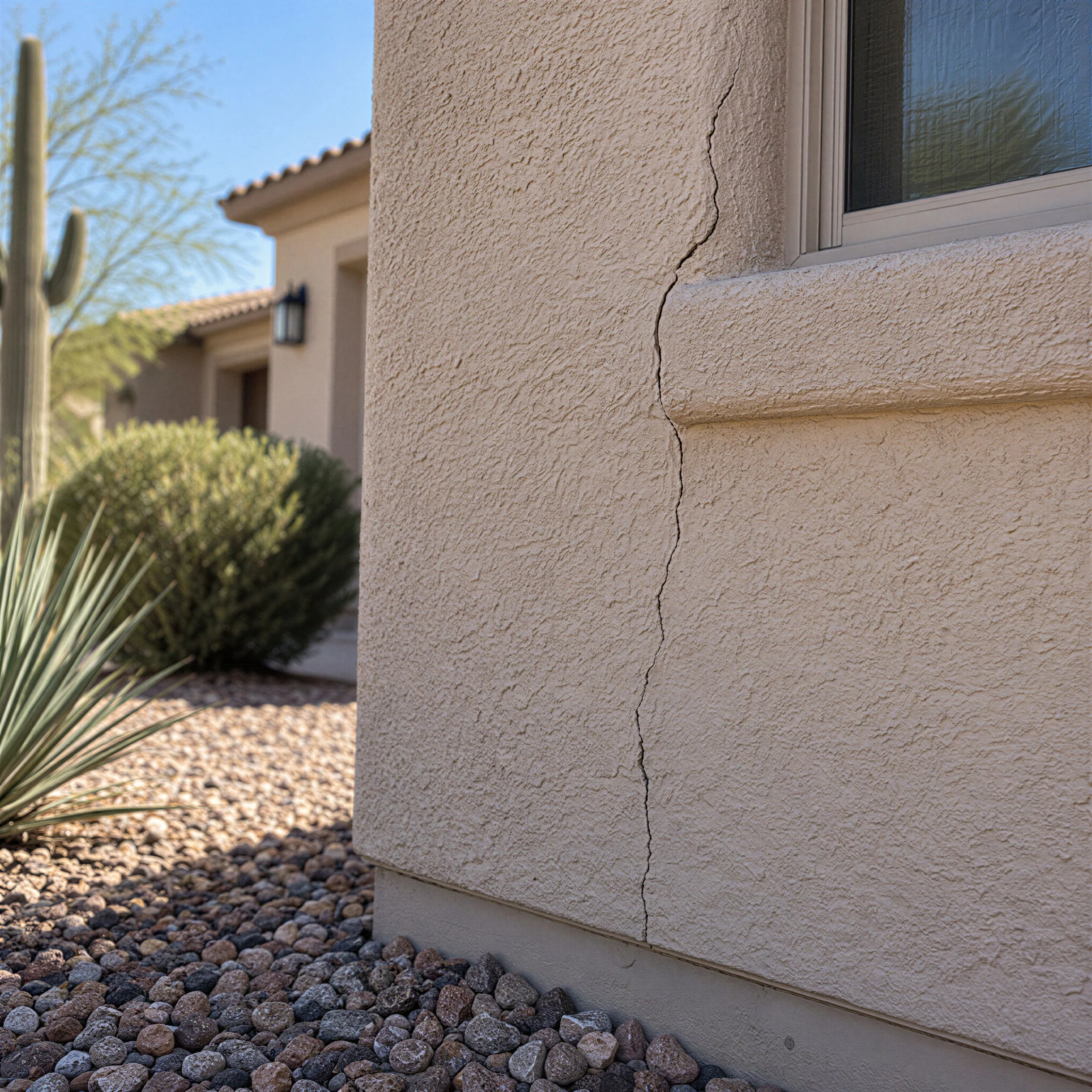
A Crack is A Clue
A crack in your house's exterior wall may signal a more serious foundation issue. Here’s what to do if you see a crack.
Discovering a crack on the outside of your home can be unsettling. Before assuming the worst, let’s take a closer look. Think of this crack as a clue; understanding its cause is the first step toward choosing the right repair.
Exterior cracks can develop for several reasons. Stucco may shrink as it dries, and temperature changes can cause building materials to expand and contract. Movement in wood framing or installation issues can also contribute.
Foundation movement is another possibility. Changes in soil moisture, including moisture introduced by plumbing leaks, can affect the support beneath a home. However, a crack alone cannot establish its cause. When you first see a crack in a wall, we recommend you take the following steps.
Step 1: Start by Documenting It
Take clear photos of the crack, including a close-up and a wider view showing its location. Note the date and place a ruler beside it for scale. Keep these photos so you can compare its appearance over time.
Look for related changes around your home. Are doors or windows starting to stick? Do floors feel uneven? Have similar cracks appeared indoors? These observations can help a professional understand the bigger picture.
Step 2: Look Beyond The Crack
What else do you notice? If this isn't the first time you’ve noticed the crack, can you tell whether it has changed over time? If it has, document those findings, as they will help the professional during your assessment. It’s also important to discover if the crack is causing any windows or doors to stick. This could indicate the foundation has shifted. Finally, do you notice if the floors are uneven? Uneven floors are also a sign that the foundation needs repair.
Step 3: Examine the Surrounding Areas
Look for other clues, such as a recent spike in your water bill. A plumbing leak may be the root cause of the foundation issue and that will need to be address before you repair the foundation. It’s also a good idea to walk the perimeter of you home and look for other clues like large tree roots that may have started to grow under the home’s foundation.
Step 3: Call A Professional
Trusted Foundation Repair of Arizona offers free estimates to help homeowners understand foundation concerns and repair options.
Visit trustedfoundationrepair.net or call us at (602) 480-4180 to schedule yours.
Good foundation is built on trust.